5G Repeaters

5G NR Repeaters for Indoor and Outdoor Coverage

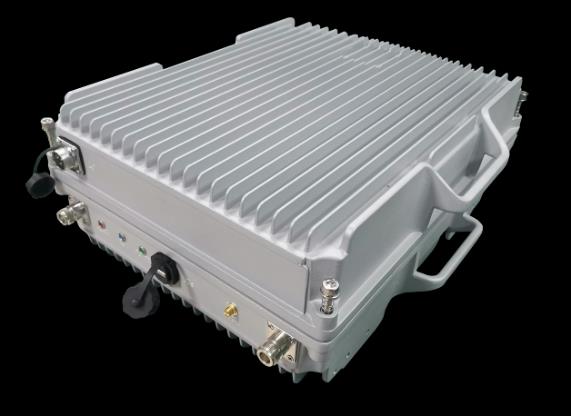
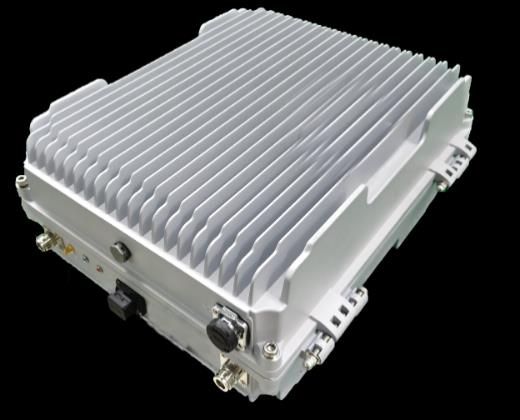
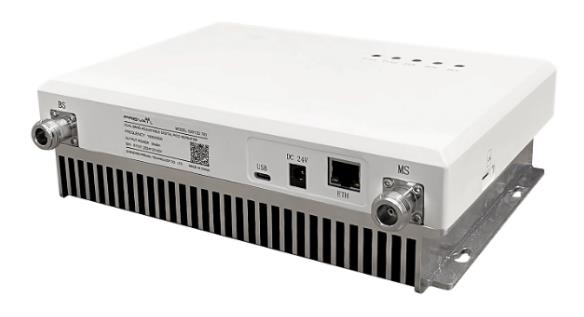
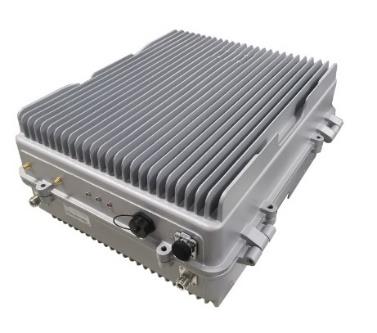
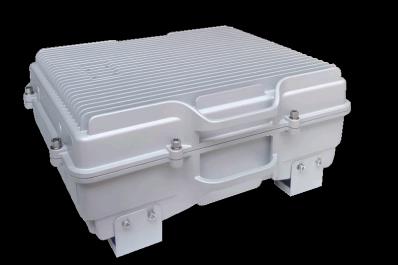
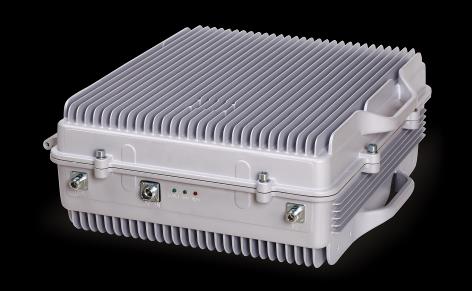
5G NR repeaters extend the coverage of mid-band 5G networks into buildings, basements and outdoor shadow areas. Because signals at 3.5 GHz and 4.5 GHz lose more energy through walls and glass than lower bands, a repeater is often the fastest way to bring a usable 5G signal indoors when a donor signal is available nearby.

Models in this group

The group includes single band and multi-band models:

  • n78 (3500 MHz) repeaters at 24 dBm, 33 dBm and 40 dBm
  • n79 (4500 MHz) repeaters at 20 dBm and 33 dBm
  • Dual band 40 dBm digital high power repeaters that pair n78 with Band 1, Band 3 or Band 41
  • A 23 dBm quad band mini repeater for Band 31, Band 5, n78 and n79
  • An n78 in-line booster rated at 30 dBm for distribution systems

According to their datasheets, the dual band models suit both coverage extension and indoor applications.

TDD synchronisation and filtering

n78 and n79 are TDD bands, which means uplink and downlink share the same frequency and alternate in time. Therefore, a 5G repeater must follow the timing of the donor network to amplify the right direction at the right moment. In addition, channel or band selective filtering keeps the repeater focused on the operator’s carriers. Check each datasheet for the supported bandwidth and synchronisation method.

Repeater or fiber DAS?

A 5G repeater suits a defined area with a usable outdoor signal. However, for large or multi-operator venues that need dedicated capacity and 4×4 MIMO, a 5G fiber DAS fed through a point of interface module is usually the better approach. Read more in our guide Fiber DAS vs. RF Repeaters, or return to all 5G coverage solutions.

Frequently asked questions

Can a 5G repeater also improve 4G?

Yes, with a dual band or quad band model. These combine an LTE band with n78 or n79 in one unit.

How much area does a 5G repeater cover?

Coverage depends on the donor signal, the output power, the antennas and the building. A site survey gives a reliable estimate.

Talk to an EMTS engineer about your 5G coverage requirements.
MR-T35-24W70 24dBm N78 3300-3800MHz TDD 5G Mini Repeater

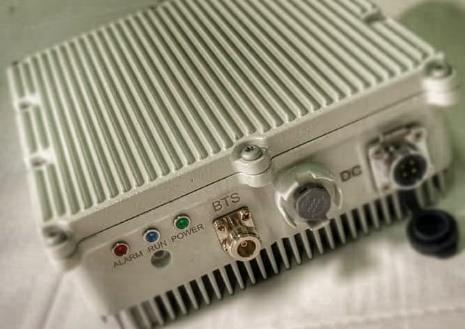
n78 3500MHz 24dBm 5G Mini Repeater

ILB-150-33W40 High Performances 30dBm TDD n78 3300-3800MHz

ILB-150-33W40 High Performances 30dBm TDD n78 3300-3800MHz

HPR-450-40W90 LTE – WCDMA Band 31 High Power Repeater

n78 3500MHz 33dBm 5G Digital Power Repeater

MRD-4500-20W70 High Reliability 23dBm Digital RF Mini Repeater

n79 4500MHz 20dBm 5G Mini Repeater

PR-GR-900-43W95 GSM-R Band Selective 43dBm High-Power Repeater

n79 4500MHz 33dBm 5G RF Repeater

DHPR-T35-40W90 40dBm N78 3300-3800MHz TDD 5G Digital High Power Repeater

n78 3500MHz 40dBm 5G Digital High Power Repeater

PR-GR-900-43W95 GSM-R Band Selective 43dBm High-Power Repeater

Band 3 + n78 1800/3500MHz 40dBm Digital High Power Repeater

PR-GR-900-43W95 GSM-R Band Selective 43dBm High-Power Repeater

Band 41 + n78 2500/3500MHz 40dBm Digital High Power TDD Repeater

MR-T35-24W70 24dBm N78 3300-3800MHz TDD 5G Mini Repeater

Band 31 + Band 5 + n78 + n79 23dBm 4G/5G Quad-Band Mini Repeater

DHPR-1835-40W95 Dual-Band 2100-3500MHz Digital High Power FDD-TDD Repeater

Band 1 + n78 2100/3500MHz 40dBm Digital High Power Repeater

5G NR Repeaters for Indoor and Outdoor Coverage

5G NR repeaters extend the coverage of mid-band 5G networks into buildings, basements and outdoor shadow areas. Because signals at 3.5 GHz and 4.5 GHz lose more energy through walls and glass than lower bands, a repeater is often the fastest way to bring a usable 5G signal indoors when a donor signal is available nearby.

Models in this group

The group includes single band and multi-band models:

  • n78 (3500 MHz) repeaters at 24 dBm, 33 dBm and 40 dBm
  • n79 (4500 MHz) repeaters at 20 dBm and 33 dBm
  • Dual band 40 dBm digital high power repeaters that pair n78 with Band 1, Band 3 or Band 41
  • A 23 dBm quad band mini repeater for Band 31, Band 5, n78 and n79
  • An n78 in-line booster rated at 30 dBm for distribution systems

According to their datasheets, the dual band models suit both coverage extension and indoor applications.

TDD synchronisation and filtering

n78 and n79 are TDD bands, which means uplink and downlink share the same frequency and alternate in time. Therefore, a 5G repeater must follow the timing of the donor network to amplify the right direction at the right moment. In addition, channel or band selective filtering keeps the repeater focused on the operator’s carriers. Check each datasheet for the supported bandwidth and synchronisation method.

Repeater or fiber DAS?

A 5G repeater suits a defined area with a usable outdoor signal. However, for large or multi-operator venues that need dedicated capacity and 4×4 MIMO, a 5G fiber DAS fed through a point of interface module is usually the better approach. Read more in our guide Fiber DAS vs. RF Repeaters, or return to all 5G coverage solutions.

Frequently asked questions

Can a 5G repeater also improve 4G?

Yes, with a dual band or quad band model. These combine an LTE band with n78 or n79 in one unit.

How much area does a 5G repeater cover?

Coverage depends on the donor signal, the output power, the antennas and the building. A site survey gives a reliable estimate.

Talk to an EMTS engineer about your 5G coverage requirements.