Point of Interface Modules for Multi-Operator DAS
A point of interface module (POI) is the junction between operators’ base stations and a distributed antenna system. It combines the RF signals of several operators and bands into common outputs that feed the DAS, and it separates the uplink signals back towards each base station. As a result, several operators can share one in-building infrastructure.
Models in this group
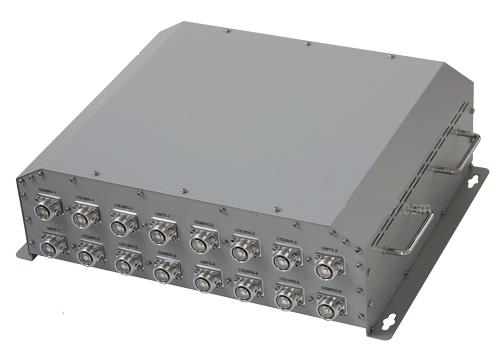
- A low loss 4G and 5G POI for 700 to 3800 MHz that combines the base stations of multiple operators into a fiber or passive DAS, with four outputs for a 4×4 MIMO DAS
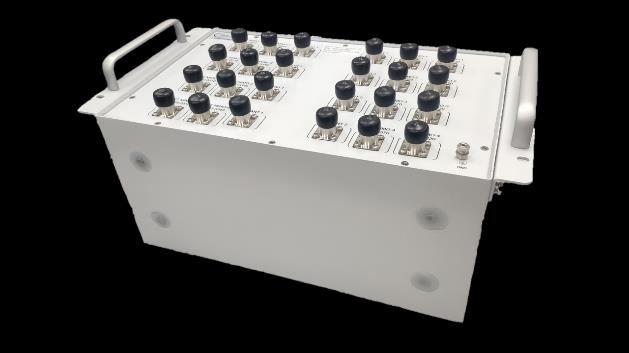
- A low loss 5G NR POI for 3300 to 3570 MHz that combines several mobile carriers for the base station and DAS interface
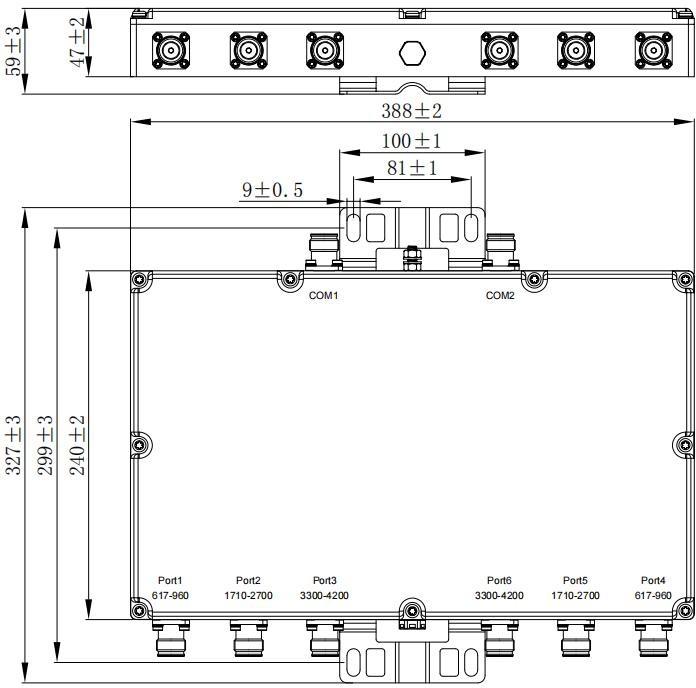
- A compact 4G and 5G POI for 617 to 4200 MHz with six inputs and two outputs
What to look for in a POI
Because a POI sits in the main signal path, its RF performance affects the whole system. Important parameters include:
- Frequency ranges and the number of input ports per operator and band
- Insertion loss and isolation between ports
- Passive intermodulation (PIM) performance at high power
- VSWR and power handling
- Number of outputs, for example for 2×2 or 4×4 MIMO
The 617 to 4200 MHz model, for example, is specified for low insertion loss and PIM, low VSWR and high isolation. Check each datasheet for exact values.
Related products
A POI typically feeds a 5G fiber DAS or a passive DAS. In addition, RF hybrid matrix units combine and split signals between base stations and DAS branches, and the high power attenuator adjusts base station power levels at the headend. Return to all 5G coverage solutions.
Frequently asked questions
Can a POI combine 4G and 5G?
Yes. Two of the models in this group are specified for both 4G and 5G base station signals.
Why is low PIM important in a POI?
Passive intermodulation creates interference products when several high power carriers pass through the same components. In a multi-operator POI, low PIM helps protect the uplink sensitivity of every operator.
Contact EMTS with your operator and band list to select the right POI.