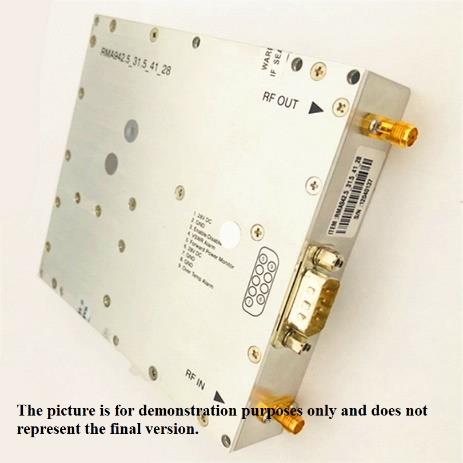
Wide-Band & Custom Amplifiers

Wideband RF Amplifiers and Custom Designs

Wideband RF amplifiers cover frequency ranges that span several bands, or special ranges outside the standard cellular groups. This makes them useful for private networks, special projects and systems that must carry several services through one power stage. The group also represents the custom side of EMTS amplifier design.

Models in this group

  • A 617 to 821 MHz multi-carrier amplifier rated at 200 W. Its datasheet describes a high-efficiency, DPD-friendly design for 3GPP bands n71, n12, n14 and n28.
  • A UHF multi-carrier power amplifier for single and multi-channel applications. It uses linear LDMOS power devices that provide high gain and a wide dynamic range.

The 200 W model also appears in the LTE and 5G NR groups, because it covers bands used by both technologies.

When a wideband amplifier makes sense

A wideband amplifier is a good fit when one amplifier must serve several adjacent bands, for example multiple low band LTE and 5G carriers between 617 and 821 MHz. It is also useful for UHF professional radio and private network systems. However, wider bandwidth places higher demands on linearity and filtering. For this reason, compare ACLR and EVM at the intended signal configuration. On the other hand, a single wideband stage can simplify the RF chain and reduce the number of components.

Custom amplifier projects

EMTS can tailor frequency range, output power, form factor and interfaces to a project. To evaluate a custom design, prepare the following information:

  • Frequency range and signal types
  • Required average and peak output power
  • Linearity targets such as ACLR and EVM
  • Supply voltage, cooling and mechanical constraints
  • Monitoring and control interfaces

For standard cellular bands, see our LTE power amplifiers and 5G NR power amplifiers, or return to all high-linearity RF power amplifiers.

Frequently asked questions

What does DPD-friendly mean?

It means the amplifier is designed to work with digital pre-distortion, which improves linearity when the host system applies DPD.

Can a wideband amplifier replace several band-specific amplifiers?

In some systems it can, which simplifies the design. However, the right choice depends on the required power per band and on the linearity targets.

Contact EMTS to discuss a wideband or custom amplifier.
MCPA-410-33W85 Multi-Carrier Solid State Power Amplifier

MCPA-410-33W85 Multi-Carrier Solid State Power Amplifier

MCPA-6182-53W45A Multi-Carrier Solid State Wide Band Power Amplifier

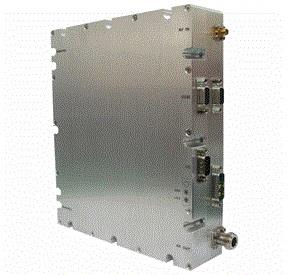
617-821MHz 200W Multi-Carrier Solid State Power Amplifier

617-821MHz 200W Multi-Carrier Solid State Power Amplifier

Download Datasheet (PDF)

The EMTS Telecom Services 617-821 MHz High-Efficiency Power Amplifier (MCPA) is a state-of-the-art, DPD-friendly amplifier designed for optimal performance in the 4G -3GPP Bands n71, n12, n14, n28 within wireless infrastructure. Leveraging GaN-on-SiC and advanced Doherty Architectures.it offers superior efficiency, robust linearity, and cost- effectiveness, making it ideal for high-power applications. With full input and output matching, this amplifier simplifies system integration while delivering high power with minimal signal distortion, ensuring reliable and efficient operation across the designated frequency range. coverage solutions for the Wireless Networks, based on advanced technologies, EMTS’s proven indoor and outdoor solutions solve a wide range of network Regardless of the technology or frequency, EMTS can provide customized needs for the Wireless Networks.

Key Features

  • High Efficiency & Linearity: The amplifier uses digital pre-distortion (DPD) to ensure high linearity, reducing out-of-band emissions and improving overall efficiency. This is critical for ensuring compliance with 4Gstandards and reducing power consumption
  • GaAs Technology: The use of GaAs allows for a compact, high-performance design that maintains high gain and efficiency, even under heavy load conditions. This material is known for its superior performance in RF and microwave frequencies, making it ideal for 5G base stations
  • Designed for 4G: Specifically tuned for the 617 to 821 MHz frequency range, this amplifier supports key 4G bands, delivering the high power and bandwidth necessary for modern wireless communications
  • Compact and Integrated Design: The amplifier’s compact size allows easy integration into existing systems with minimal redesign, and its full input/output matching simplifies installation
Technical Specifications
Technical Specification
Test items Specification
Frequency range (MHz) 617-821
Maximum input power(dBm) ≤20dBm
Output power P1dB(dBm) 53±2 dBm
Output power Pmax(dBm) 50±1 dBm
Signal mode LTE
ACPR@PAR=9.5(dBc)/Po=44 dBm ≤ -30dBc
EVM@ Po=44dBm of PAR=9.5 ≤5%
Gain(dB) 45±1 dB
Passband Ripple(dB) ±2.0dB
ALC control range(dB) ≥20dB
ATT range(dB) NC
Port VSWR ≤1.5
Power amplifier switch Have
Input power detection(dBm) NC
Output power detection(dBm) 15dBm~50dBm
Reflected power detection(dBm) 15dBm~50dBm
Temperature detection (℃) -40~100℃
Working voltage (VDC) 48VDC
Static working current (A) ≤2.5A
Dynamic working current(A) ≤4A@Po=44dBm
Operating temperature range(℃) -40~85℃
Size (mm) 165*135*26mm EMTS Telecom Services is a leading supplier of high-quality RF coverage solutions designed to
and standards of wireless Networks.
9-way D-Sub Male Connector
Pin (Description) Specification Analog voltage (0V to 3V) proportional to PA temperature (-20 to +70 °C). Typical Gain: 10 mV / °C Typical Offset: 500 mV @ 0°C
1 Temperature Monitor Vout =(10mV/°C x Temp °C)+500 mV Vout = +1.750V at +125°C Vout = +750 mV at +25°C Vout = +100mv at -40°C Analog voltage (0V to 3V) proportional to PA Forward Output
Forward Power Power (30dBm to 53dBm, CW)
2
Monitor Vout (max) ≤ 3V @ Pout 53dBm Typical Gain: 27mV/dB Analog voltage (0V to 3V) proportional to PA Reverse Output
Reverse Power Power (27dBm to 50dBm, CW)
3
Monitor Vout (max) ≤ 3V @ Pout 50dBm Typical Gain: 27mV/dB Connect fixed resistor from GND to pin 4.
4 (PA id) *The Customer* will connect to 3.3V via a pull-up resistor for PA identification Resistor value: 3.32K, 1% Internal pull-up, resistor value chosen to comply with Tx Enable/Disable Rise & Fall Time.
5 TX Enable (Active low) The customer will connect to open drain control, resistor value and pull-up voltage subject to approval. Pull-up voltage of 3.3V or 5V preferred. Connect fixed resistor from VCC to pin 6. The customer will connect to pull-down resistor to create potential divider for PA voltage monitoring.
6 VCC monitor Typical resistor: 1M, 1% @ VCC 48V. Other resistor values and VCC supply voltages subject to approval.
7 (Not connected) RS485A
8 (Not connected) RS485B
9 (GND) Ground
2W2 D-Sub Male Connector
Pin (Description) Specification
A1 (VCC) +48V
A2 (GND) Ground coverage solutions for the Wireless Networks, based on advanced technologies, EMTS’s proven indoor and outdoor solutions solve a wide range of network Regardless of the technology or frequency, EMTS can provide customized needs for the Wireless Networks.
Outline
and standards of wireless Networks.

Wideband RF Amplifiers and Custom Designs

Wideband RF amplifiers cover frequency ranges that span several bands, or special ranges outside the standard cellular groups. This makes them useful for private networks, special projects and systems that must carry several services through one power stage. The group also represents the custom side of EMTS amplifier design.

Models in this group

  • A 617 to 821 MHz multi-carrier amplifier rated at 200 W. Its datasheet describes a high-efficiency, DPD-friendly design for 3GPP bands n71, n12, n14 and n28.
  • A UHF multi-carrier power amplifier for single and multi-channel applications. It uses linear LDMOS power devices that provide high gain and a wide dynamic range.

The 200 W model also appears in the LTE and 5G NR groups, because it covers bands used by both technologies.

When a wideband amplifier makes sense

A wideband amplifier is a good fit when one amplifier must serve several adjacent bands, for example multiple low band LTE and 5G carriers between 617 and 821 MHz. It is also useful for UHF professional radio and private network systems. However, wider bandwidth places higher demands on linearity and filtering. For this reason, compare ACLR and EVM at the intended signal configuration. On the other hand, a single wideband stage can simplify the RF chain and reduce the number of components.

Custom amplifier projects

EMTS can tailor frequency range, output power, form factor and interfaces to a project. To evaluate a custom design, prepare the following information:

  • Frequency range and signal types
  • Required average and peak output power
  • Linearity targets such as ACLR and EVM
  • Supply voltage, cooling and mechanical constraints
  • Monitoring and control interfaces

For standard cellular bands, see our LTE power amplifiers and 5G NR power amplifiers, or return to all high-linearity RF power amplifiers.

Frequently asked questions

What does DPD-friendly mean?

It means the amplifier is designed to work with digital pre-distortion, which improves linearity when the host system applies DPD.

Can a wideband amplifier replace several band-specific amplifiers?

In some systems it can, which simplifies the design. However, the right choice depends on the required power per band and on the linearity targets.

Contact EMTS to discuss a wideband or custom amplifier.